
Franktown Relocation Guide: Everything Before the Move
Franktown is best suited to relocators who want a rural Colorado setting, larger properties, and access to broader regional employment options without living in a dense suburb. Franktown is an unincorporated community in Douglas County, not an incorporated city. Before moving, plan around property type, driving distances, school assignment, utilities, and wildfire awareness. This Franktown Relocation Guide explains what to consider before choosing a home and community fit.
Franktown Relocation Guide Quick Reference
Franktown's appeal is primarily lifestyle-driven, and its small, acreage-oriented housing market makes address-level research more useful than broad averages.
- Community type: An unincorporated Douglas County community, counted by the Census Bureau as a census-designated place. Services such as zoning, roads, and law enforcement come through Douglas County rather than a town government.
- Population: The Franktown census-designated place itself had roughly 470 residents in the 2020 to 2024 Census estimates, while the broader Franktown ZIP code (80116) had about 5,100. (U.S. Census Bureau)
- Recent sale prices: Closings in summer and early fall 2026 ranged from about $595,000 for land and smaller properties to $2 million and above for larger estate homes, which shows how much price depends on acreage and improvements. (Local sales data, as of September 2026)
- Market pace: Many Franktown listings in 2026 have taken two months or longer to sell, so buyers often have time to compare and sellers should plan for a longer marketing period. (Local listing data, as of September 2026)
- Area household income: Douglas County's median household income was $149,594 in 2024 dollars for 2020 to 2024. (U.S. Census Bureau)
- Biggest relocation draw: Lifestyle is the clearest draw. Buyers commonly prioritize privacy, open land, equestrian potential, and a quieter setting while remaining connected to regional services and employment.
Why People Are Moving to Franktown
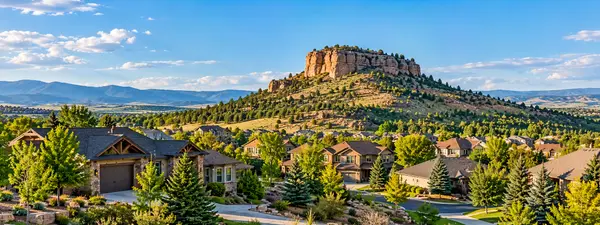
People are moving to Franktown primarily for space, rural character, and access to a broader regional employment base. The community offers a different daily rhythm from denser suburban areas, with acreage, equestrian-oriented properties, open views, and room for households that value privacy.
Franktown sits within Douglas County, where work opportunities are spread across the county and other employment centers reached by road. Douglas County's unemployment rate was 3.3% in May 2026, according to the U.S. Bureau of Labor Statistics, and the county's own first-quarter 2026 economic report described a local economy outperforming many regional markets.
Housing choice is another pull factor. Instead of a standardized subdivision experience, buyers may find a wider range of land sizes, accessory buildings, private-road arrangements, and utility setups. A Franktown community overview provides local context for comparing commute patterns, acreage, and budget priorities.
The tradeoff is convenience. Franktown living generally requires more advance planning for errands, services, and transportation. For many relocators, that is a deliberate choice in exchange for lower density and a more land-centered lifestyle.
Property Taxes and Ownership Costs in Franktown
Franktown's cost of living is highly property-specific because acreage maintenance, insurance, water systems, and commuting can matter more than a single local index.
In Franktown, property taxes depend on assessed value and applicable county, school, fire, and special-district levies. For Franktown properties in Douglas County, consult Douglas County's official assessor and treasurer resources. Because taxing districts vary by parcel, verify current mill levies, assessed value, and any special-district charges for the specific address before budgeting. For parcels outside Douglas County, use the official assessor and treasurer resources for the county where the parcel is located.
Housing Market Overview
Franktown's buyer experience is a property-by-property search, with single-family acreage homes far more common than condos or townhomes. Recent sales show how wide the range is. In summer and early fall 2026, closings ran from roughly $595,000 for land and modest homes to $2 million and above for larger homes on bigger parcels, with many established acreage homes landing between about $750,000 and $1.6 million. Several of those sales closed a few percent below their final list price after two or more months on the market.
That limited standardization makes comparison work central to a Franktown move. Buyers should compare lot size, access, drainage, utility arrangements, outbuildings, road maintenance, zoning, and usable outdoor space alongside the home itself. A lower list price does not necessarily mean lower ownership costs if a property requires more ongoing land or infrastructure management.
Market conditions can differ by segment. A smaller home near a main route may draw a different buyer pool than a larger equestrian or acreage property. Because Franktown sales are sparse and acreage varies, compare similar properties by land, improvements, access, and location rather than assuming the market consistently favors buyers or sellers.
Comparing acreage, road conditions, accessory buildings, and utility configurations can give a more useful view of available land and acreage than a single community-wide statistic.
Neighborhoods and Communities in Franktown
Franktown is best compared by setting, access, and property style because it does not function like a master-planned municipality with consistently reported neighborhood-level price ranges.
Central Franktown and the Highway 83 corridor suit buyers who want a rural address with relatively direct regional road access. Housing can include established single-family homes, acreage parcels, and properties where location may matter as much as the structure itself. This setting can work well for commuters balancing privacy with a more manageable daily drive.
Acreage-oriented areas surrounding Franktown appeal to buyers seeking larger lots, outdoor storage, hobby space, or equestrian potential. Homes vary widely in age, design, land usability, and infrastructure. These properties can suit remote workers and households that value space, but they require careful planning for internet service, maintenance, and travel time. A closer look at Franktown's acreage and ranch communities can help narrow which settings match your plans.
The Douglas County rural fringe offers another comparison point for relocators who want a similar low-density environment but need to prioritize a particular route, school assignment, or service access. There is no dependable public price band that applies across all of these settings, so a home-by-home comparison is more useful than a generalized neighborhood number.
Compare each location by its road access, land use, outbuildings, commute route, and utility setup before deciding which part of the Franktown area fits your routine.
Franktown Jobs and Economy
Franktown's employment outlook is closely connected to the broader Douglas County economy, with many residents working elsewhere in the county or at other locations reached by car. Local activity is shaped by public services, construction, agriculture-related work, education, health services, and small businesses.
Douglas County's unemployment rate was 3.3% in May 2026, according to the U.S. Bureau of Labor Statistics, down from a year earlier. The county's first-quarter 2026 economic development report placed the quarterly rate at 3.7% and noted that Douglas County continued to post one of the lowest unemployment rates in its region.
For remote workers, connectivity should be verified at the address level. Coverage and available service options can differ sharply across rural properties, even when homes are only a short distance apart. Confirm upload speed, equipment needs, and backup options before making a location decision.
Schools and Education
Franktown is served by Douglas County School District, with school assignment determined by the specific property address. District school information identifies Franktown Elementary as serving PreK through grade 5 within the Ponderosa High School feeder area, alongside Sagewood Middle School and Ponderosa High School.
Franktown Elementary describes itself as an AVID Schoolwide campus. Douglas County School District organizes schools into feeder systems, so families should verify the assignment for a specific address rather than relying on a general community label.
School assignment can vary by exact address, so relocators should confirm boundaries and transportation directly with the district before choosing a home. Families may also want to compare program availability, commute time, extracurricular offerings, and the practical logistics of a rural school-day schedule.
Climate and Lifestyle
Franktown offers a high-plains Front Range lifestyle with strong sun, changing seasons, and outdoor space that can shape everyday routines.
Daily life often centers on outdoor space. Larger lots can support gardening, animals, workshops, trailering, or simply more separation from neighboring homes. Castlewood Canyon State Park, just south of the community, is a nearby recreation destination for hiking, scenery, and seasonal outdoor activity.
Relocators should budget for weather-related maintenance. Snow and ice can affect driving and private-road access in winter, while dry conditions and wind can increase wildfire awareness in rural and open-space settings. Confirm defensible-space expectations, insurance availability, driveway access, drainage, and snow-removal responsibilities for the specific property.
What to Budget Beyond the Purchase Price
Franktown ownership costs can vary more by parcel conditions and local levies than by a standard suburban monthly budget.
- Property taxes: Tax bills vary by assessed value and the overlapping local levies attached to a parcel. Counties, school districts, fire districts, and special districts certify levies annually. Review the official tax record and taxing-district details for the specific parcel.
- Homeowner's insurance: Premiums can vary materially by location, construction, acreage, wildfire exposure, and insurer underwriting. Obtain property-specific quotes before finalizing a budget.
- Road and land maintenance: Private roads, gates, fences, drainage features, and larger outdoor areas can create recurring costs that do not appear in a standard suburban budget.
- Utilities and connectivity: Well, septic, propane, electric service, and internet arrangements may differ from one address to another. Confirm service providers and typical usage directly for the home.
- Well permit limits: In Colorado, a well's permit controls how its water can be used. A household-use-only permit generally allows water inside the home only, with no lawn, garden, or livestock watering, while a domestic and livestock permit, more common on parcels of 35 acres or more, can allow up to one acre of lawn and garden irrigation plus watering for the owner's animals. If you plan to keep horses or grow a large garden, check the permit before you fall in love with the property.
- Association or district charges: Some properties may have HOA dues, metropolitan district obligations, or shared-maintenance agreements. Review each recorded obligation and its payment schedule.
Is Franktown the Right Fit?
Franktown is the stronger fit for households prioritizing land and privacy, while households that want quick access to everyday services may find the tradeoffs harder to live with.
| Franktown tends to fit well if you... | Franktown may be a harder fit if you... |
|---|---|
| Want acreage, privacy, and room for animals or hobbies | Prefer walkable errands and nearby services |
| Are comfortable driving for most daily needs | Want a short, predictable commute every day |
| Can budget for wells, septic, roads, and land upkeep | Prefer a low-maintenance lot with city utilities |
| Work remotely with a confirmed internet option | Rely on a specific internet speed that has not been verified at the address |
| Value a quiet, low-density setting | Want an HOA-maintained subdivision with shared amenities |
The right choice depends on whether your priority is land and privacy, shorter access to services, or a more conventional suburban routine. For Franktown, a property-specific review is more reliable than broad market averages.
Talk Through a Franktown Move
Thaine Swanson is the managing broker and co-owner of CENTURY 21 Altitude Real Estate, a locally based Douglas County team that holds the CENTURY 21 Gold Medallion distinction and works regularly with acreage, ranch, and land buyers across Douglas County. If you are comparing Franktown properties and want help sorting through well permits, road access, outbuildings, and recent comparable sales, reach Thaine at (720) 221-1700 or thaine@c21altitude.com, or send a note through the contact page. Conversations are available in English and Spanish.
Frequently Asked Questions About Moving to Franktown
Is Franktown a good place to live?
Franktown can be a strong fit for people who want a lower-density Colorado lifestyle with room for land-based hobbies and access to regional employment options. It is not a one-size-fits-all choice because daily errands, services, and commuting generally require more driving than in a dense suburb.
How affordable is housing in Franktown?
Housing costs in Franktown are highly dependent on the individual property, especially its acreage, outbuildings, road access, utilities, and land usability. Closings in summer and early fall 2026 ranged from about $595,000 for land and smaller properties to $2 million and above for larger estate homes, so comparing similar properties is more informative than relying on one market-wide figure.
What are the job prospects in Franktown?
Residents can pursue local work as well as employment throughout the broader Douglas County economy. Douglas County's unemployment rate was 3.3% in May 2026, according to the U.S. Bureau of Labor Statistics.
What should I know about schools in Franktown before moving?
Franktown Elementary serves PreK through fifth grade in the Douglas County School District Ponderosa feeder area. Confirm assigned schools, transportation options, and program availability for the exact home address before making a move.
What are the biggest costs to budget for when relocating to Franktown?
Beyond the purchase price, plan for property taxes, insurance, utilities, connectivity, road care, and land maintenance. Costs can be more variable for rural properties, particularly where private systems or shared-maintenance agreements apply. It is also worth reviewing the well permit, since it determines whether you can water livestock or irrigate a garden.
Recent Posts

GET MORE INFORMATION
